Julia Beitel
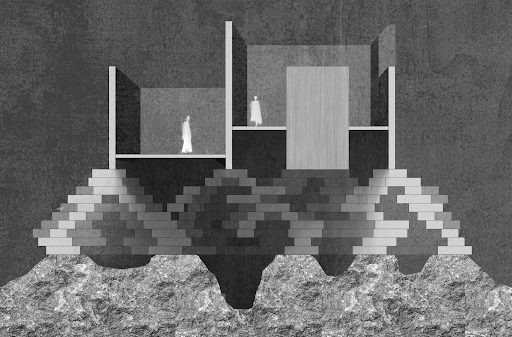
Resilient Walls modular brick wall rendered as flood defense
Team
Chi Zhang
Course
Biomimetics in Design, Spring 2025

Resilient Walls

Lightweight, Load-Optimized Modular Brick System

  • Grasshopper
  • Rhino 3D
  • 3D printing
  • Material testing
  • Biomimicry research

Problem

More than 60% of people in Guyana, Tuvalu and the Bahamas face 100-year flood hazards (Archer et al.), and gabion walls are heavy, material-intensive and slow to assemble.

Approach

Modular bricks that borrow bird-bone porosity for light strength and conch-shell layering for crack resistance.

Outcome

Clear 1:20 scale prototypes with three density types and alternating grain direction, assembled into a modular wall.

My role
Ran material testing and developed the 3D-printing process; translated the biological research into the brick system

How might we make flood walls light enough to deploy fast, strong enough for extreme conditions, and modular enough to reuse?

Biological inspiration
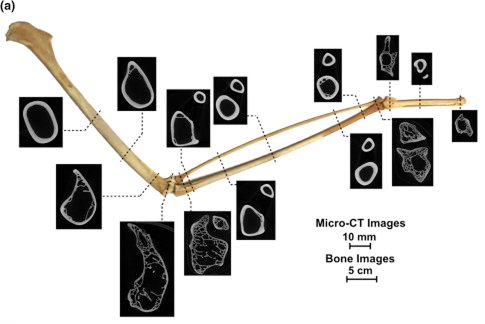
Bird bone with micro-CT cross sections showing internal porosity

Bird bones → lightweight strength

High internal porosity keeps strength while cutting weight (Sullivan et al.).
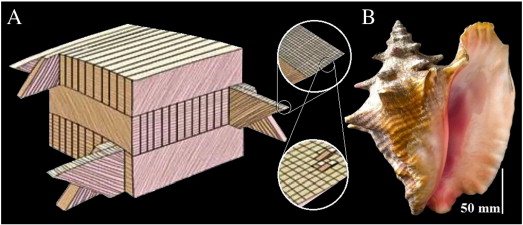
Conch shell and diagram of its layered lamellar structure

Conch shells → fracture resistance

A three-tiered layered structure deflects cracks (Osuna-Mascaró et al.).

How I built it

01

Map the stresses

Topology optimization (run by teammate Chi Zhang in Millipede) mapped stress lines and three density zones.

Topology optimization (Grasshopper)

02

Set the grain

Grain follows the stress lines and alternates between neighboring bricks to deflect cracks.

Parametric design

03

Standardize the bricks

Three lengths (30, 45 and 65 mm) at a 15 mm height, with density set by shell thickness.

Modular system design

04

Test the prints

Iterative print tests got to 0% infill, varying density through shell thickness alone and orienting each brick to its grain.

Material testing, 3D printing

Outcome

Backlit models show the density zones and grain directions

1:20

scale clear PLA prototypes

3

brick densities, set by shell thickness alone

Assembly · click to enlarge

Shell thickness variation

Assembly from the stress map

Assembled bricks

Next steps

  • Bio-based filaments

    Researched wood-based and biocomposite filaments to reduce microplastics in water and allow composting.

  • Friction joinery

    Micro-textured, friction-based connections inspired by shell structures.

  • Low-tech version

    Rammed earth that keeps the grain-direction principle for places without 3D printers.

  • Validation and scale

    Flood-load testing and full-scale 15 × 15 × 30 cm bricks.
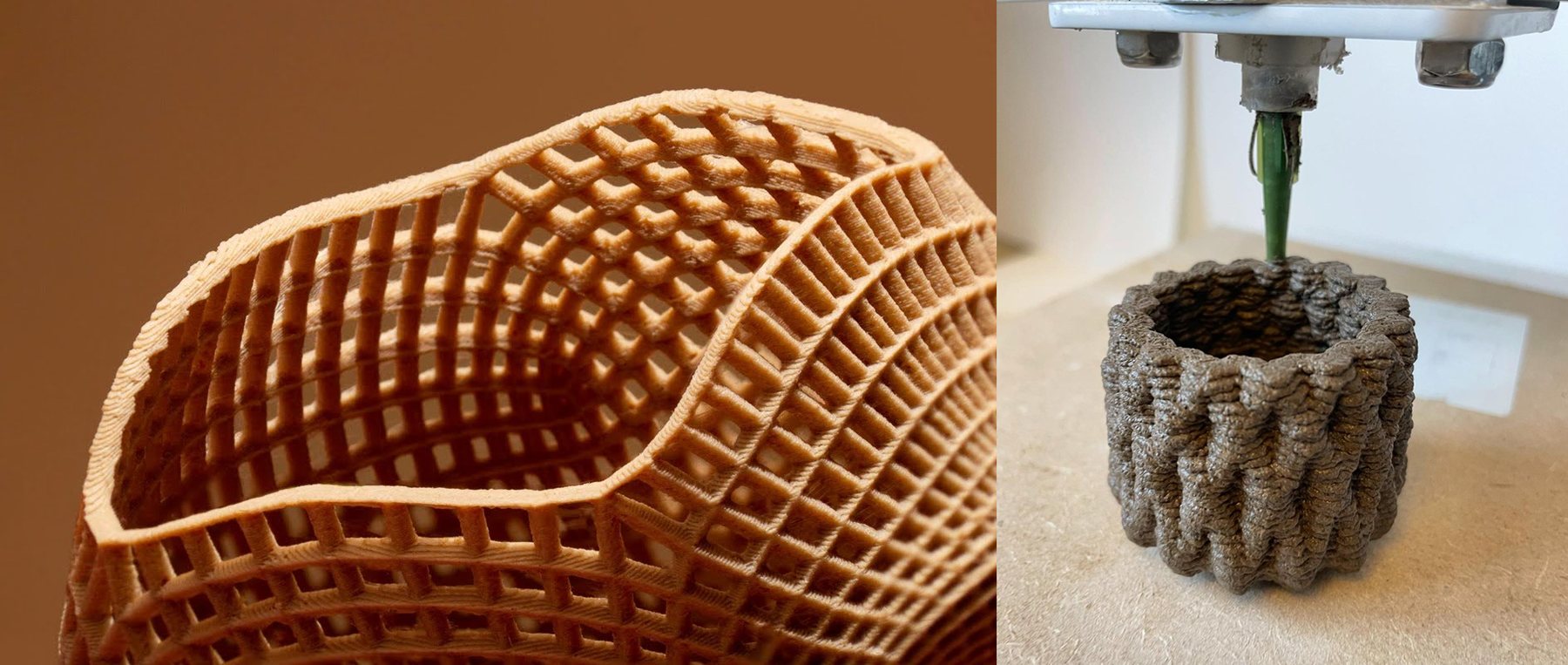
3D-printed objects made from bio-based materials
Bio-based printing precedents (Gehr, Eastside Projects)

I'm always interested in new opportunities and collaborations. Feel free to reach out!

LinkedIn New York, NY
Julia Beitel

Resilient Walls

Lightweight, Load-Optimized Modular Brick System

Resilient Walls modular brick wall rendered as flood defense
Team
Chi Zhang
Course
Biomimetics in Design, Spring 2025
  • Grasshopper
  • Rhino 3D
  • 3D printing
  • Material testing
  • Biomimicry research

Problem

More than 60% of people in Guyana, Tuvalu and the Bahamas face 100-year flood hazards (Archer et al.), and gabion walls are heavy, material-intensive and slow to assemble.

Approach

Modular bricks that borrow bird-bone porosity for light strength and conch-shell layering for crack resistance.

Outcome

Clear 1:20 scale prototypes with three density types and alternating grain direction, assembled into a modular wall.

My role

Ran material testing and developed the 3D-printing process; translated the biological research into the brick system

How might we make flood walls light enough to deploy fast, strong enough for extreme conditions, and modular enough to reuse?

Biological inspiration

Bird bone with micro-CT cross sections showing internal porosity

Bird bones → lightweight strength

High internal porosity keeps strength while cutting weight (Sullivan et al.).

Conch shell and diagram of its layered lamellar structure

Conch shells → fracture resistance

A three-tiered layered structure deflects cracks (Osuna-Mascaró et al.).

How I built it

01 / 04

Map the stresses

Topology optimization (run by teammate Chi Zhang in Millipede) mapped stress lines and three density zones.

Topology optimization (Grasshopper)

02 / 04

Set the grain

Grain follows the stress lines and alternates between neighboring bricks to deflect cracks.

Parametric design

03 / 04

Standardize the bricks

Three lengths (30, 45 and 65 mm) at a 15 mm height, with density set by shell thickness.

Modular system design

04 / 04

Test the prints

Iterative print tests got to 0% infill, varying density through shell thickness alone and orienting each brick to its grain.

Material testing, 3D printing

Outcome

Backlit models show the density zones and grain directions

1:20

scale clear PLA prototypes

3

brick densities, set by shell thickness alone

Assembly · tap to enlarge

Shell thickness variation

Assembly from the stress map

Assembled bricks

Next steps

3D-printed objects made from bio-based materials
Bio-based printing precedents (Gehr, Eastside Projects)
  • Bio-based filaments

    Researched wood-based and biocomposite filaments to reduce microplastics in water and allow composting.

  • Friction joinery

    Micro-textured, friction-based connections inspired by shell structures.

  • Low-tech version

    Rammed earth that keeps the grain-direction principle for places without 3D printers.

  • Validation and scale

    Flood-load testing and full-scale 15 × 15 × 30 cm bricks.

I'm always interested in new opportunities and collaborations. Feel free to reach out!

LinkedIn New York, NY