- Team
- Vita Sipayung
- Course
- Design for Physical Interaction, Spring 2025
BuzzFinder
Wearable Haptic Assistive Device
- Arduino
- MQTT
- Rhino 3D
- Adobe Illustrator
- 3D printing
- User testing
- Claude Code
Goal
Explore how physical computing and telepresence can extend what people with vision impairment can sense around them.
Approach
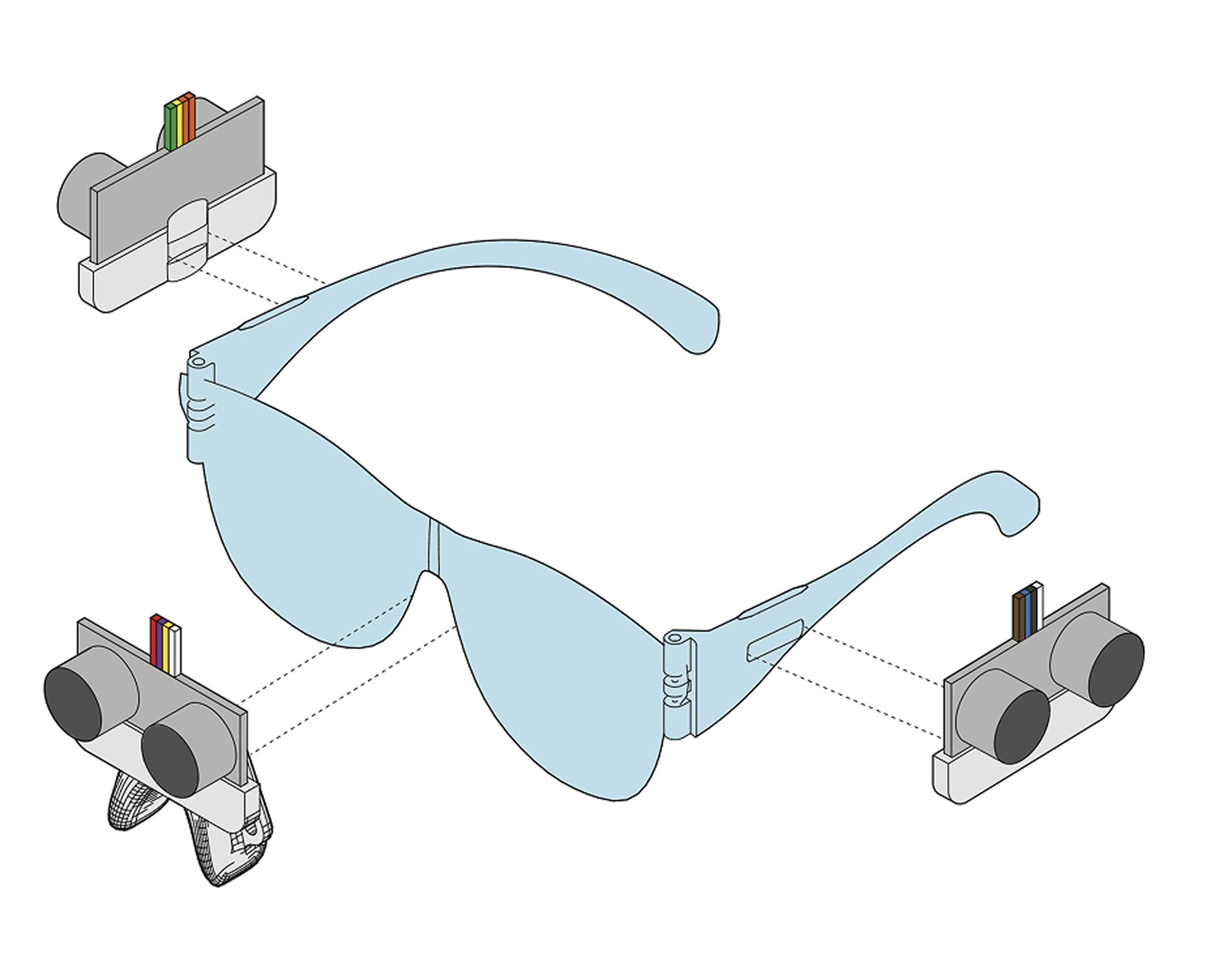
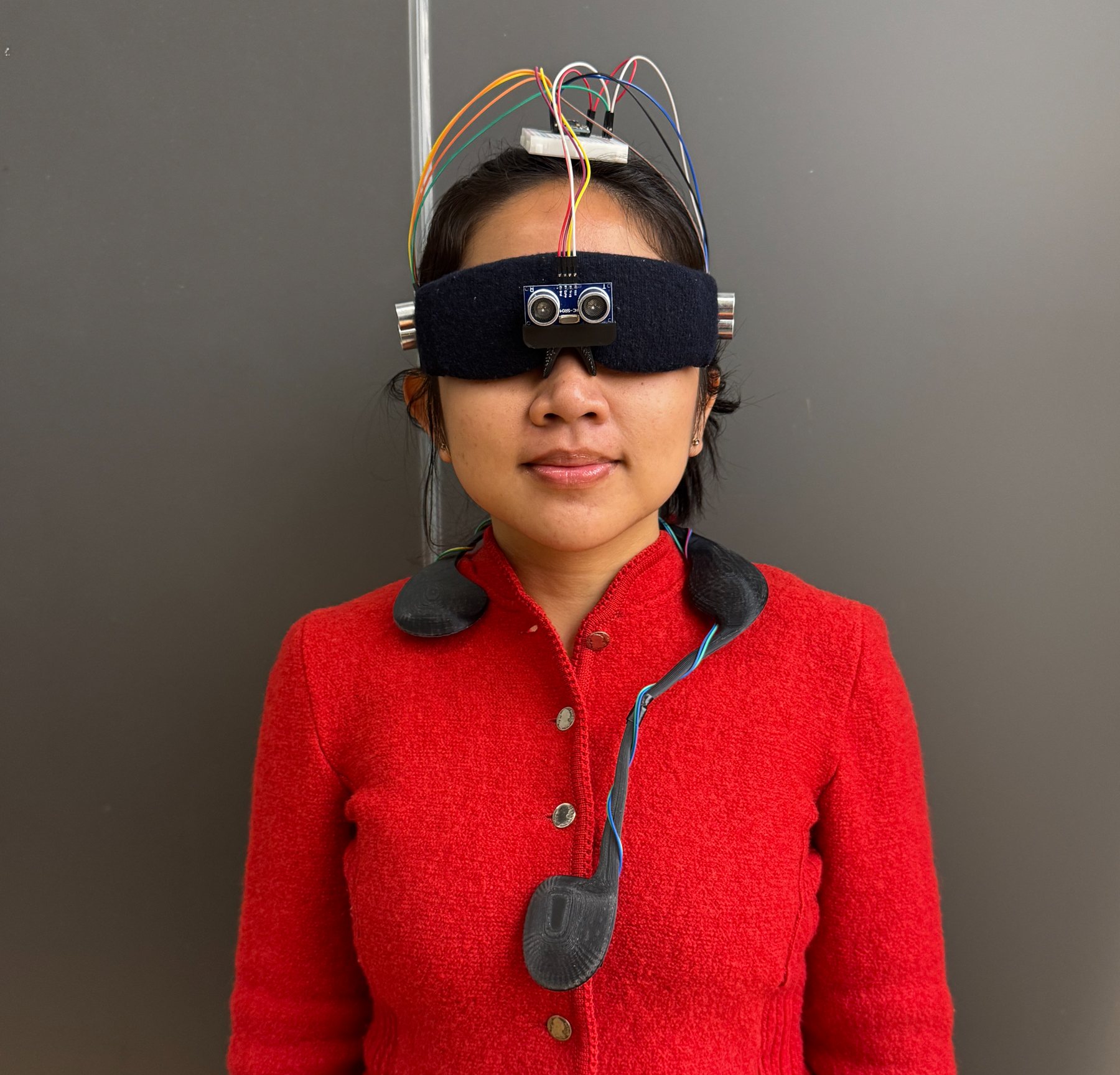
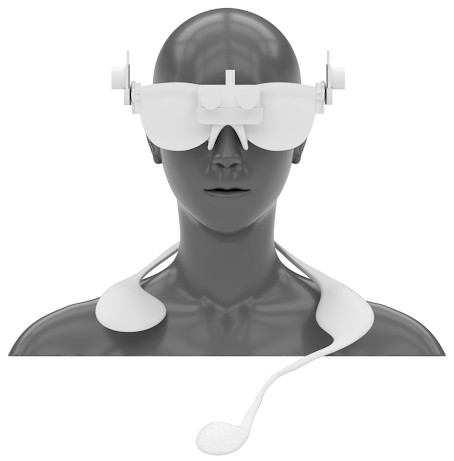
Ultrasonic sensors on glasses detect objects to the front, left and right; a necklace with three vibration motors buzzes harder as objects get closer.
Outcome
A working 3D-printed prototype linked over MQTT, with its form shaped by user testing with individuals who are visually impaired.
- My role
- Built the hardware and MQTT code, ran user testing, and modeled and 3D-printed both wearables
User testing with individuals who are visually impaired moved the feedback from the hands to a necklace, so the device doesn’t limit other senses users might rely on.
How I built it
01
Map distance to buzz
Closer objects mean stronger vibration. Under 20 cm the motors pulse a warning, and with nothing in range the device stays quiet.
Interaction design
02
Wire and code it
An Arduino with HC-SR04 ultrasonic sensors and ERM vibration motors; MQTT links the glasses to the necklace.
Arduino, MQTT, AI-assisted coding (Claude Code)
03
Shape the wearables
Both pieces were modeled in Rhino to hold the sensors and motors while staying low-profile.
Rhino 3D, Adobe Illustrator, 3D printing
Outcome
Schematics · click to enlarge
Ultrasonic sensor schematic
Vibration motor schematic