- Team
- Rajvi Patil
- Course
- Transformable Design Methods, Fall 2025
Reef Project
Transformable Artificial Reef Structure
- Mechanism design
- 3D modeling
- Print-in-place 3D printing
- Technical drawing
- Fabrication
Problem
Reefs protect coastlines and marine life, but today’s restoration structures are heavy and rigid, so they’re hard to transport and slow to deploy.
Approach
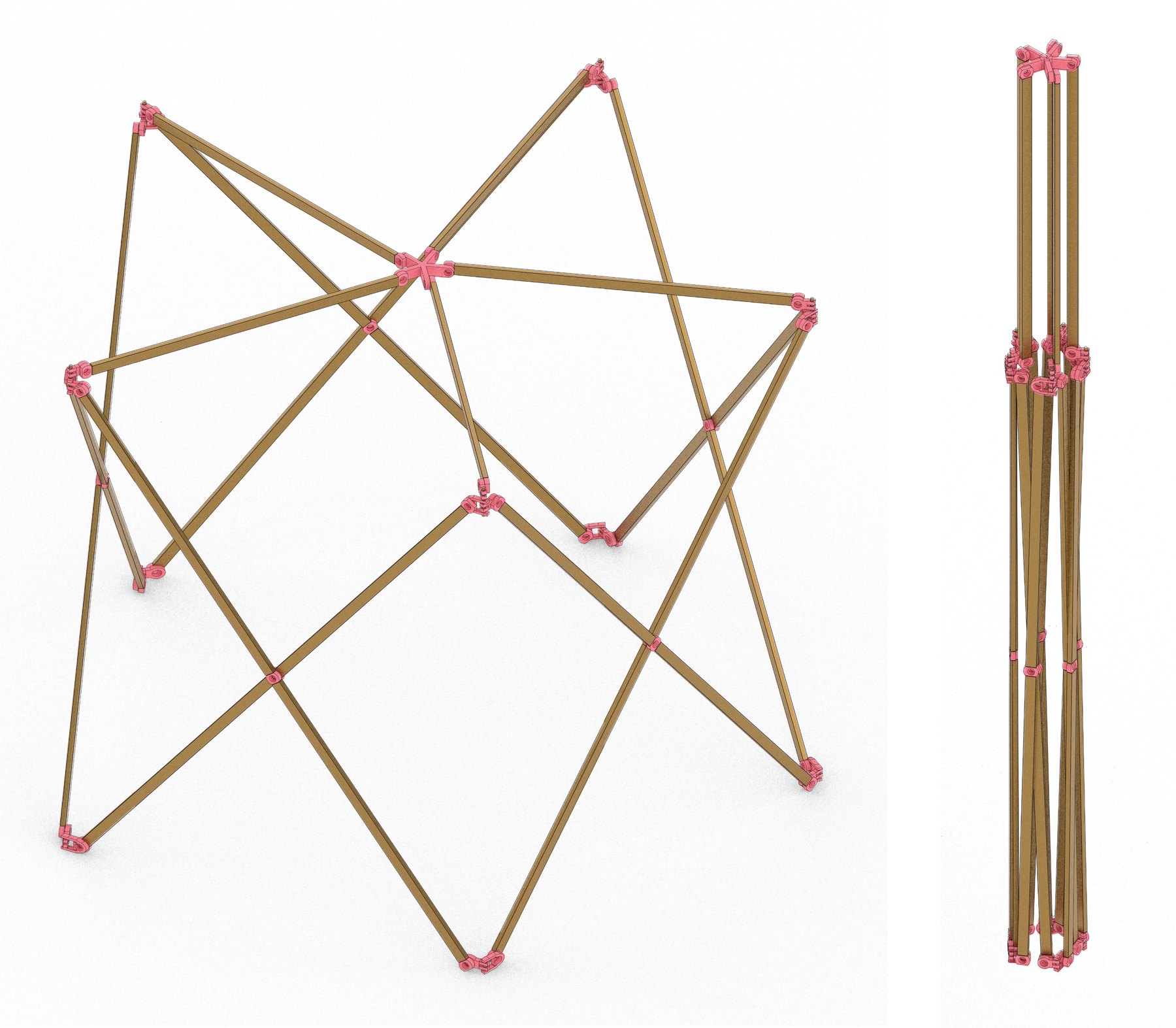
A scissor-mechanism frame that collapses for transport and expands underwater into a stable reef structure.
Outcome
A working kinematic model in brass and 3D-printed hinges, documented in technical drawings and designed for assembly-line manufacturing.
- My role
- Designed the scissor mechanism and joint details, produced the technical drawings, and created the speculative deployment imagery
Collapse to expand
The mechanism
A scissor framework controls collapse and expansion, so each unit packs small and opens in one motion, cutting the time divers spend deploying it.
Precedent
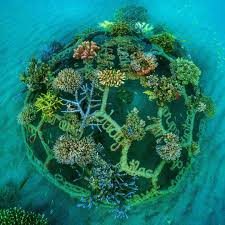
Biorock, which uses low-voltage currents to grow minerals on submerged metal frames.
How I built it
01
Design the mechanism
Brass sections, threaded standoffs, screws, washers and 3D-printed hinges recreate the intended motion.
Mechanism design, 3D modeling
02
Detail every joint
Each moving joint was prototyped with print-in-place 3D printing so it moves smoothly underwater and stays stable once expanded.
Joint studies, print-in-place 3D printing
03
Build the model
The final model was assembled from brass bars and 3D-printed hinges, chosen for fast fabrication and iteration.
Fabrication, rapid prototyping
04
Show it at scale
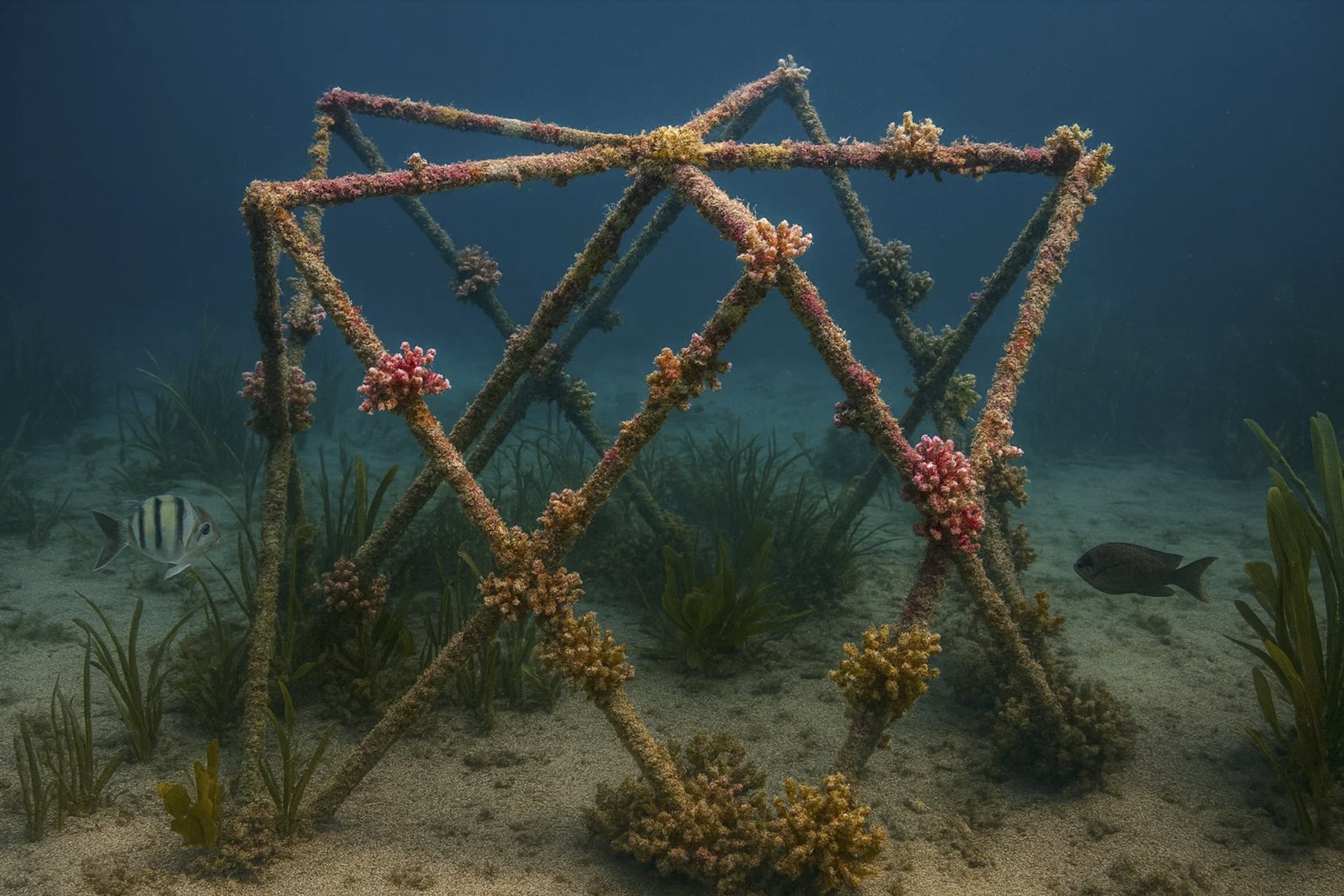
Speculative imagery shows modules shipped collapsed, then expanding underwater into reef habitat.
Speculative imagery using Midjourney
Technical drawings · click to enlarge
Isometric view
Elevation view
Plan view
Joint details · click to enlarge
Link assembly
Top side hinge
Bottom side hinge
Section of the scissor linkages